

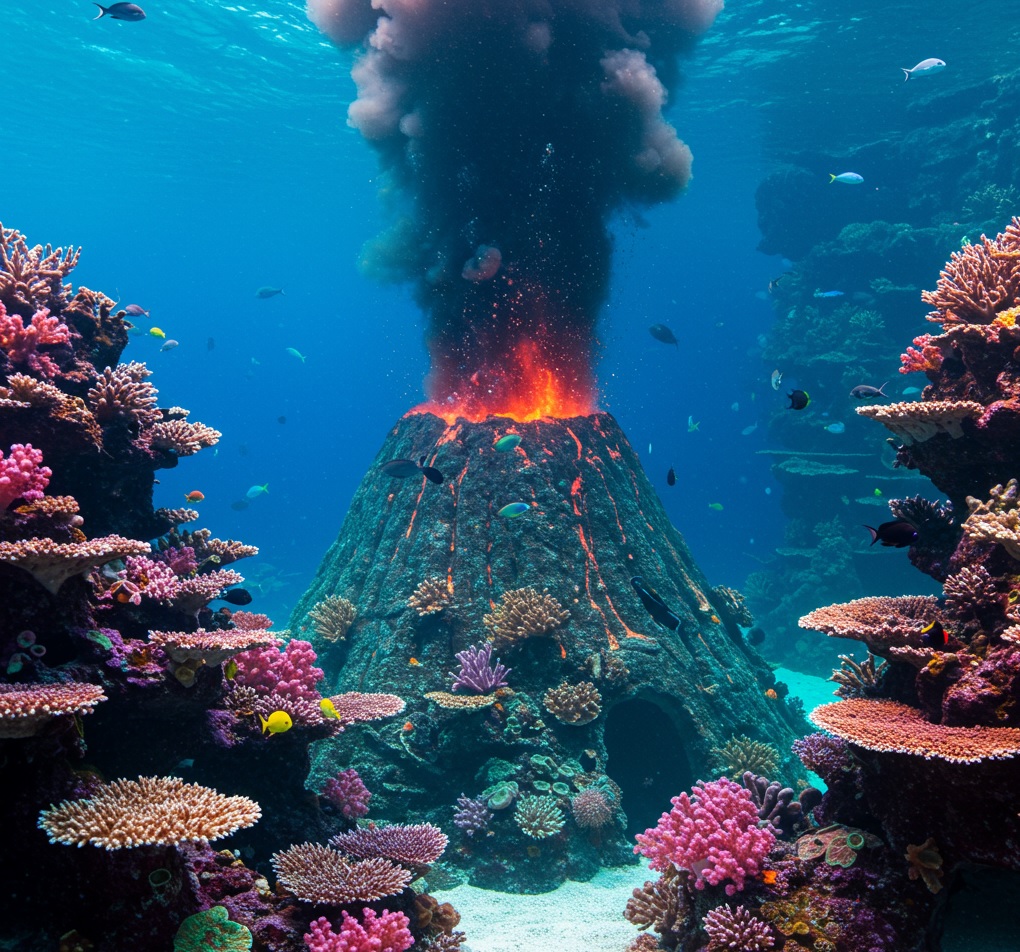
Hundreds of miles off the coast of Oregon, a large undersea volcano could soon erupt and blanket the seafloor with lava, scientists reported.
The volcano, called Axial Seamount, is nearly 1 mile (about 1.4 kilometers) under water at a geologic hot spot, a region where floods of molten rock boil from Earth’s mantle and up through the crust. Hotspot volcanoes are also abundant beneath the ocean. But Axial Seamount also just sits on the Juan de Fuca ridge, a place where two gigantic tectonic plates — the Pacific and Juan de Fuca plates — are ceaselessly spreading apart, putting pressure in between the planet’s growing cracks.
Earthquakes there have recently surged in frequency as the volcano swells with more and more magma, indicating an eruption could be imminent, according to scientists who work on the National Science Foundation’s Ocean Observatories Initiative Regional Cabled Array, a facility managed by the University of Washington that tracks the goings-on at Axial Seamount.
“There’s maybe a couple hundred earthquakes a day now, which is still not that many compared to what we saw prior to the last eruption,” said William Wilcock, a marine geophysicist and professor at the University of Washington School of Oceanography who studies the volcano.
“I’d say (it was going to happen) in a year or two, towards the end of this year or early next year, but it could be tomorrow, because it’s totally unpredictable,” he added.
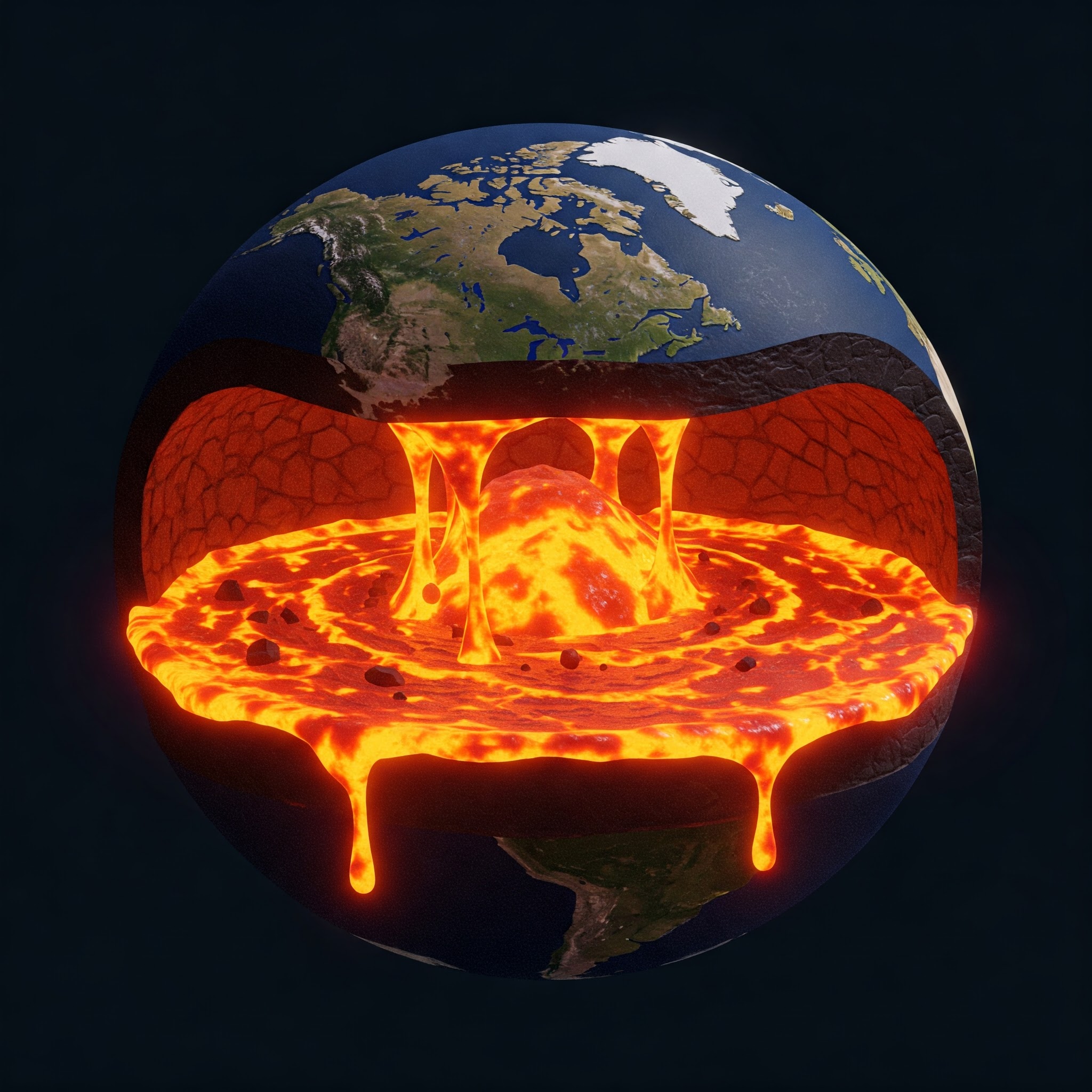
What occurs during an eruption?
During that past eruption, which took place in April 2015, the team detected around 10,000 small-scale earthquakes over the course of 24 hours, and the next event will probably be the same, according to Wilcock.
Beneath the ocean’s serene surface lies a world of explosive power most of us never see. When the Axial Seamount erupted in 2015, it unleashed a staggering 10,000 earthquakes in a single day, with magma flowing continuously for a month. Yet unlike their land-based cousins, these underwater volcanoes remain largely invisible to us, their immense geological forces creating and sustaining life in ways that defy imagination.
What makes these submarine giants truly fascinating isn’t just their raw power—it’s their surprising connection to life itself. From the mineral-rich hydrothermal vents that support unique ecosystems to the mysterious influence of lunar cycles on eruption patterns, underwater volcanoes represent one of Earth’s most extraordinary yet least understood phenomena. Join us as we explore these oceanic powerhouses, their role in sustaining marine biodiversity, the cutting-edge methods scientists use to study them, and the unexpected relationship between these volcanic behemoths and our nearest celestial neighbor.
The Geological Marvel of Underwater Volcanoes
Understanding Axial Seamount’s Structure and Activity
Axial Seamount stands out among underwater volcanoes with its unique horseshoe-shaped caldera and massive lava flows. This oceanic hotspot rises 3,600 feet from the seafloor, revealing secrets about marine volcanic activity through continuous monitoring by specialized equipment.
The Dramatic 2015 Eruption: 10,000 Earthquakes and Magma Flow
The 2015 eruption showcased nature’s raw power – over 10,000 earthquakes in just 24 hours as magma pushed through rock. Scientists captured this seafloor volcanic eruption in real-time, watching as molten lava transformed the deep ocean landscape and created new hydrothermal vent ecosystems.
Life-Sustaining Hydrothermal Vents
How Mineral-Rich Gases Create Underwater Oases
Deep sea hydrothermal vents spew mineral-laden fluids that transform barren seafloor into bustling biological hotspots. These vents emit hydrogen sulfide and other compounds that specialized bacteria convert into energy – replacing the sun’s role and forming the foundation of these unique food webs.
Remarkable Ecosystem Resilience After Lava Flows
Underwater volcano ecosystems bounce back surprisingly quickly after eruptions. Within months of a seafloor volcanic eruption, microbial communities recolonize cooling lava flows, followed by tube worms and crabs, demonstrating nature’s remarkable adaptability in these extreme environments.
Scientific Monitoring and Research Methods
A. Advantages of Studying “Mild” Underwater Eruptions
“Mild” submarine eruptions give scientists a rare peek into volcanic processes without the dangers of explosive events. Researchers can deploy equipment closer to the source, collecting data on gas emissions, temperature changes, and seafloor deformation that would be impossible during major eruptions.
B. Pioneering Livestream Technology for Future Eruptions
Imagine watching an underwater volcano erupt in real-time from your computer! New deep-sea cameras and internet-connected sensors are making this possible. These systems not only capture stunning footage but also transmit crucial oceanic volcano monitoring data that helps predict future eruptions.
Science Projects For Kids and Adults 🌎
Lunar Influence on Underwater Volcanic Activity
How Moon Gravitational Forces Affect Eruption Timing
Turns out, the moon doesn’t just pull on our oceans—it tugs at underwater volcanoes too. Research suggests submarine volcanic eruptions might follow lunar cycles, with more activity during full and new moons when gravitational forces peak.
Tidal Pressures and Their Impact on the Seafloor
Ever notice how pressure changes things? The moon’s pull creates massive tidal pressures on the seafloor, potentially cracking open volcanic vents. Scientists tracking deep sea hydrothermal vents have spotted connections between tidal shifts and increased volcanic gas emissions.
Underwater volcanoes remain one of Earth’s most fascinating geological mysteries, shaping our ocean floors and supporting unique ecosystems through their hydrothermal vents. The Axial Seamount, with its remarkable resilience and predictable eruption patterns, offers scientists an unprecedented opportunity to understand these hidden powerhouses. The discovery of lunar gravitational influence on volcanic activity adds another layer to our understanding of these complex systems, demonstrating how celestial forces affect our ocean depths.
Conclusion: As technology advances, our ability to monitor and livestream underwater eruptions will continue to unlock secrets of these submarine phenomena. These volcanic systems not only demonstrate nature’s raw power but also its capacity to sustain life in the most extreme environments. The vibrant communities thriving around hydrothermal vents remind us that our oceans’ depths harbor incredible biodiversity worth protecting and studying for generations to come.
LATEST
-

China Unlikely To Give in First As Trump’s Trade War Enters Uncharted New Territory
Have you ever watched a high-stakes game of tug-of-war? That’s what the US-China trade…
-

85 Octane Gas is Now Available for Purchase
Ever stood at the gas pump, scratching your head over the octane options? 🤔…
-

Touched by Zeus: How a Fatal Lightning Strike Peek in to the Glimpse of the Great Beyond
The Man Who Cheated Death Dannion Brinkley isn’t your average Joe. This guy has…
-

iPhones ‘Made in USA’: A Financial Nightmare for Apple Fans?
Imagine walking into an Apple store and seeing an iPhone price tag that reads…
-

Think It, Do It: The Astonishing Future of AI-Powered Mental Command
Imagine a world where AI seamlessly integrates into your daily life, not just through…
-

The Milky Way to Better Grades? Exam Room Findings Shake Up School Lunches
The recent buzz about the “Whole Milk for Healthy Kids Act” has us, and…